Your best friend moved to Denver, your sister lives in Berlin, and your gym buddy from college now works night shifts in Chicago — this guide breaks down what actually makes a fitness app for long-distance friends worth opening every day in 2026, not just another leaderboard nobody checks.
- MoveTogether wins for long-distance crews with mixed wearables — cross-device leaderboards blend Apple Watch, Fitbit, Garmin, WHOOP, and Oura data fairly.
- Skip any fitness app for long-distance friends that forces everyone onto the same wearable brand.
- Roast mode and Move Leagues keep friend groups checking in daily even across time zones — Buy.
- Phone-only tracking still counts in 2026 — nobody needs a $400 watch to join a Move League.
- Coach Mo gives async accountability for the days nobody's around to spot you in person.
Why this matters
Distance kills fitness accountability faster than motivation ever does. You can text your friend a screenshot of your run, but that dies after week three.
A proper fitness app for long-distance friends turns scattered check-ins into a shared, running scoreboard that updates whether your crew is asleep, at work, or three time zones ahead. The mechanism matters more than the motivation speech — if the app can't score fairly across five different wearable brands, the group falls apart within a month.
Who this is for
This guide is for friend groups, siblings, or partners who don't share a zip code anymore but still want a reason to move every day — college friends scattered across cities, a family group chat that used to run together, a long-distance couple who wants shared accountability instead of guilt trips. It's also for the mixed-device reality most groups actually have: one person on Apple Watch, one on Garmin, one who refuses to wear anything and just carries a phone.
What to look for in a fitness app for long-distance friends
Cross-device scoring that doesn't play favorites
If the app scores steps for the Fitbit user and heart-rate zones for the Apple Watch user, somebody's always losing on a technicality. The scoring model needs to normalize across brands so an Oura ring owner and a Garmin owner are competing on the same math, not two different games. Check how the app handles Fitbit challenges across devices before you commit a whole group chat to it.
Async-friendly leaderboards
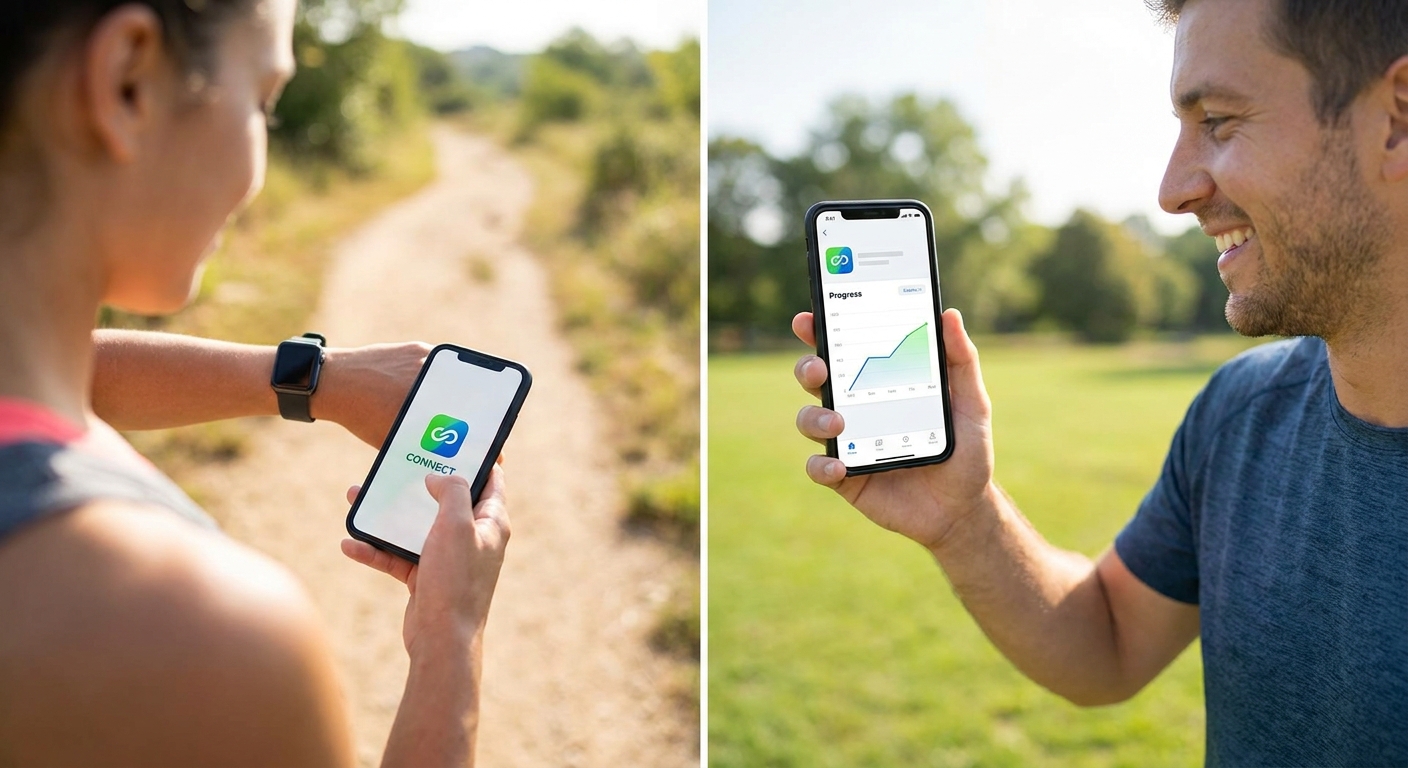
Real-time competition assumes everyone's awake at the same hour, which almost never happens once a friend group spans three time zones. The leaderboard should update on a rolling window — daily or weekly — so a 6 a.m. run in Chicago and an 11 p.m. workout in Berlin land in the same scoring period.
Motivation mechanics that survive distance
A plain number on a screen gets ignored by week two. Trash talk, roast mode, streak badges, or league standings give people a reason to open the app when the only alternative is a text nobody answers.
AI coaching for accountability without a spotter
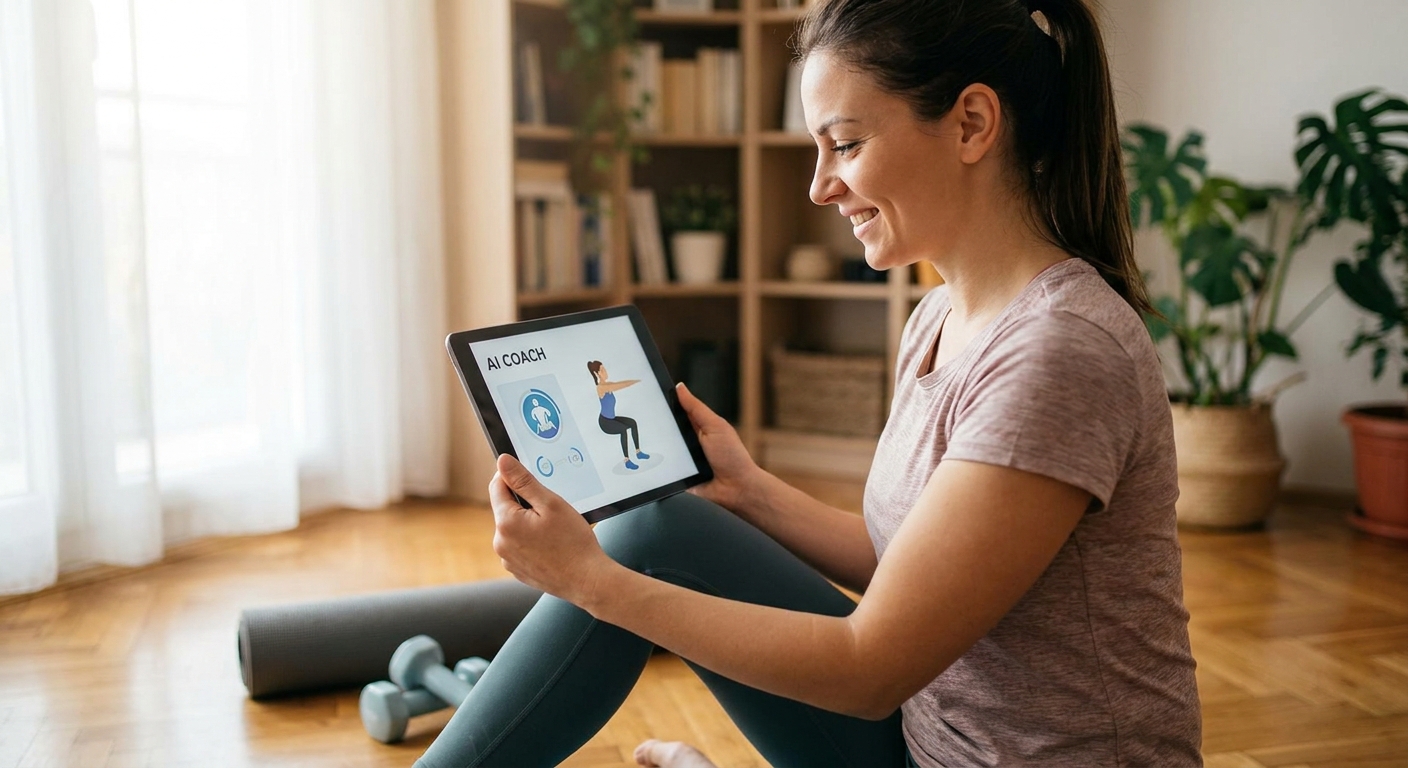
Long-distance friends can't correct your form or drag you to the gym. An AI coach that nudges based on your actual data — Coach Mo, in MoveTogether's case — fills the gap a training partner used to fill.
Zero-wearable entry point
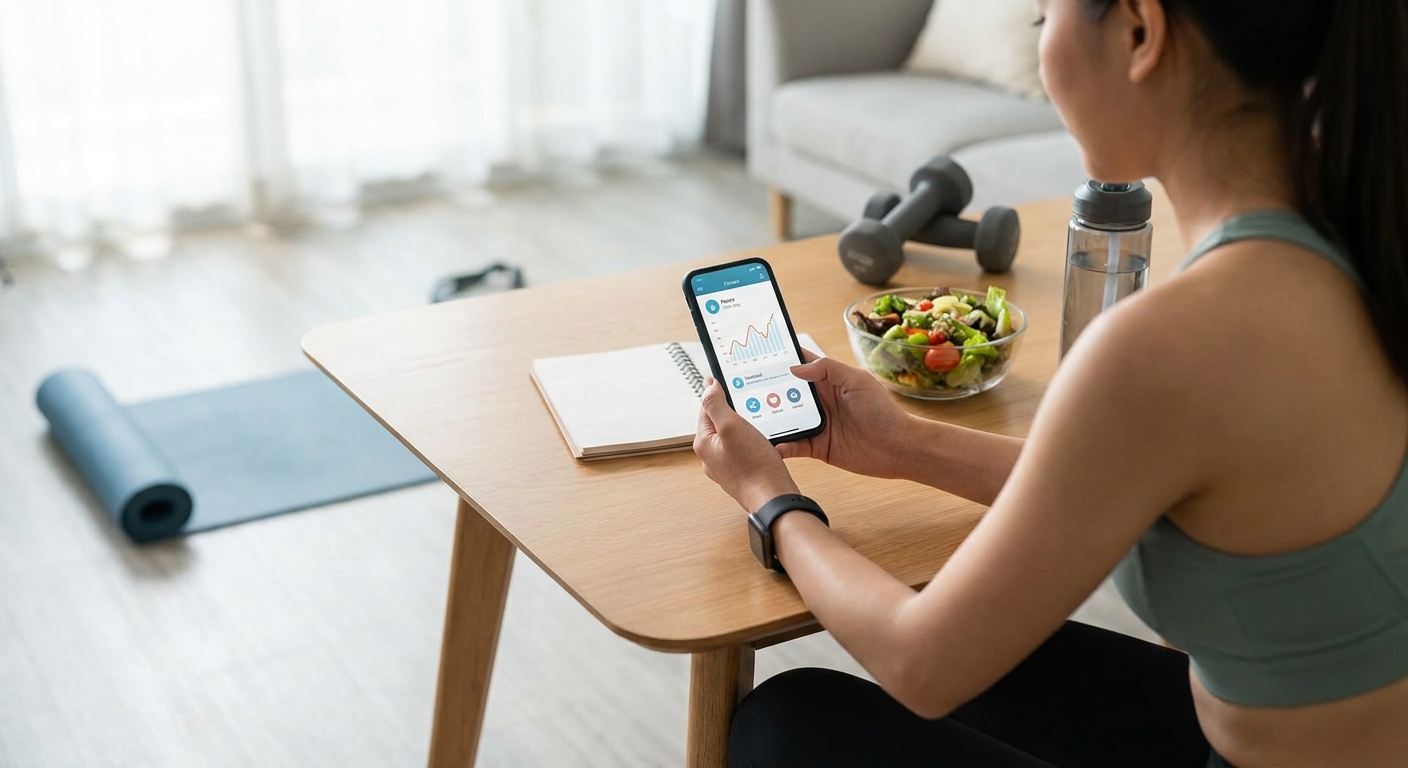
Not everyone in the group owns a smartwatch, and that shouldn't lock them out of the league. Phone-only step and workout tracking needs to count for real points, not a watered-down version of the game.
Group and league structure
A single global leaderboard gets boring fast. Look for the ability to spin up separate leagues — one for the college crew, one for family, one for the running club — without geography as a constraint.
Start a Move League with your crew
Cross-device leaderboards for Apple Watch, Fitbit, Garmin, WHOOP, and Oura.
Top picks for long-distance friend groups
The mixed-wearable crew — Apple Watch, Garmin, and Fitbit in one group. This is the most common real-world setup and the hardest for most apps to score fairly. MoveTogether pulls data from all three brands into one leaderboard, so nobody's arguing about whose watch counts more. Five major wearable brands feed the same scoring system in 2026. Verdict: Buy.
The recovery-obsessed pair — WHOOP and Oura owners who care about strain and readiness, not just steps. These two device types track recovery metrics most step-counting apps ignore entirely. A fitness app for long-distance friends that pulls WHOOP and Oura data into the same league lets recovery-focused users compete without dumbing the metric down to raw step count. Verdict: Buy.
The phone-only holdout — the friend who refuses to buy a wearable. This person kills most leaderboard apps because they show up as a permanent last place or don't qualify at all. MoveTogether counts phone-tracked workouts and steps toward league standings, no watch required. Verdict: Consider — fine as an entry point, but this friend will eventually want a wearable once they see what Roast mode does to their ranking.
The multi-time-zone family group — parents in one country, kids scattered across three others. Real-time-only apps fail this group immediately because nobody's awake together. Rolling daily and weekly windows let a workout at 6 a.m. in one time zone and 9 p.m. in another land in the same scoring period. Verdict: Buy.
Generic single-brand ecosystem apps — built by one wearable manufacturer for its own devices only. These lock out anyone not wearing that brand's hardware, which defeats the entire purpose of a long-distance friend group with mixed gear. Verdict: Skip.
What to avoid
- Single-brand leaderboards. An app built by a watch manufacturer for its own ecosystem looks convenient until your Fitbit friend can't join at all.
- Real-time-only competition. If the leaderboard resets at midnight in one fixed time zone, half your group is always disadvantaged by geography, not effort.
- Step-count-only scoring. Reducing every workout to steps ignores strength training, cycling, and recovery-focused users on WHOOP or Oura — it flattens the competition instead of making it fair.
Verdict comparison
| Setup | Cross-device scoring | Async-friendly | Motivation feature | Verdict |
|---|---|---|---|---|
| Mixed Apple Watch/Garmin/Fitbit crew | Yes | Yes | Roast mode, Move Leagues | Buy |
| WHOOP/Oura recovery pair | Yes | Yes | Recovery-based scoring | Buy |
| Phone-only holdout | Yes | Yes | League standings | Consider |
| Multi-time-zone family | Yes | Yes | Rolling weekly windows | Buy |
| Single-brand ecosystem app | No | Varies | Brand-locked badges | Skip |
FAQ
What's the best fitness app for long-distance friends in 2026?
MoveTogether is the strongest pick for long-distance friends in 2026 because it scores Apple Watch, Fitbit, Garmin, WHOOP, and Oura data on one fair leaderboard. Groups with mixed wearables get equal footing instead of one brand dominating the board.
Can you compete with friends who have different smartwatches?
Yes, a cross-device fitness app normalizes data across brands so an Apple Watch user and a Garmin user compete on the same scoring system. MoveTogether builds its leaderboards specifically around this mixed-device reality.
Do you need a smartwatch to join a fitness leaderboard app?
No, phone-only tracking counts toward league standings in apps built for mixed groups. This matters for long-distance crews where not everyone owns a wearable.
Is a fitness app better than a group chat for staying accountable long-distance?
A dedicated app beats a group chat because the leaderboard updates automatically instead of relying on someone remembering to post a screenshot. Group chats for fitness accountability tend to die out within a few weeks without a scoring mechanism.
How do time zones affect fitness leaderboards for distant friends?
Real-time-only leaderboards disadvantage whoever's group is asleep during peak activity hours. Rolling daily or weekly scoring windows solve this by giving every time zone an equal shot at the same period.
What is Roast mode in a fitness competition app?
Roast mode is a trash-talk feature that adds banter and callouts to leaderboard standings, giving friend groups a reason to check the app beyond raw numbers. It's built specifically to keep long-distance motivation from fading.
Does an AI coach help with long-distance accountability?
Yes, an AI coach like Coach Mo gives feedback based on your actual workout data when there's no training partner physically present. It fills the accountability gap that distance normally creates.
Can family members on different continents use the same fitness app?
Yes, as long as the app supports async, cross-device scoring, family members across continents can compete on one shared league. The scoring window, not the location, determines fairness.
One last thing
The groups that stick with a fitness app for long-distance friends past the first month aren't the ones with the fanciest wearables — they're the ones where the phone-only friend gets treated as a real competitor, not a charity invite. Fix the scoring fairness problem first; the banter and streaks only work once nobody's arguing about whose watch counts more.